François de La Rochefoucauld belonged to one of France's oldest noble houses. As prince de Marcillac, he was heir to a great name and a place at court, and he entered the army young, as was expected of a nobleman. In 1628 he married Andrée de Vivonne, a match that joined him to another prominent family. His early career mixed military service with court intrigue. He fell under suspicion in political schemes against Cardinal Richelieu in the 1630s, was briefly imprisoned in the Bastille in 1637, and was exiled from court.
When the Fronde divided France in the middle of the century, La Rochefoucauld sided with the rebellious princes against the crown and Cardinal Mazarin. He fought for the prince de Condé and was wounded at the Battle of the Faubourg Saint-Antoine in 1652. He had inherited the title of duc de La Rochefoucauld in 1650, but the rebellion's failure ended his hopes of political power. He then withdrew from armed politics and turned toward the literary life of Parisian salons.
His Memoirs, published in 1662, described the intrigues he had witnessed and caused a stir. His enduring reputation, however, rests on Réflexions ou sentences et maximes morales, usually called the Maxims, first published in 1665 and revised in later editions. Developed in the salon of Madame de Sablé, these short, polished observations treat human conduct as driven by self-love, vanity, and hidden interest. La Rochefoucauld also shared a close literary friendship with Madame de La Fayette. His compact, unsentimental moral portraits made him one of the defining writers of French classicism.
Francois De La Rochefoucauld was born on September 15, 1613 in Paris, Ile-de-France, France. In Cardology (Destiny Cards), September 15, 1613 corresponds to the Nine of Clubs, making the Nine of Clubs his Birth Card.
In numerology, the name adds another layer to the birth-date profile. The letters of a person’s name are used to explore inner motivation, personality, expression, and the qualities they bring into relationships and everyday life. Explore how his original name François de La Rochefoucauld influences his life and personality.
Francois De La Rochefoucauld Quotes
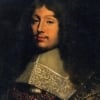
“Love is like a ghost. Everybody talks about it, but no one saw.” - Francois De La Rochefoucauld
Famous Virgo People
Discover famous Virgo people, from actors and musicians to writers, athletes, and historical figures. Explore their birthdays and biographies, and see who shares the Virgo zodiac sign.




View All Famous Virgo People →
Famous People born on September 15
View All Famous People Born on September 15 →
Nine of Clubs Famous People


View All Famous Nine of Clubs People →