Metacognition - the brain's capacity to monitor and assess its own thoughts - is a cornerstone of human intelligence. It allows us to evaluate confidence, detect errors, and adjust decisions in real time. Yet how this reflective function changes with age has remained an open question. Do we rely on a single, general introspective system, or does the brain use specialized circuits for different types of cognition?
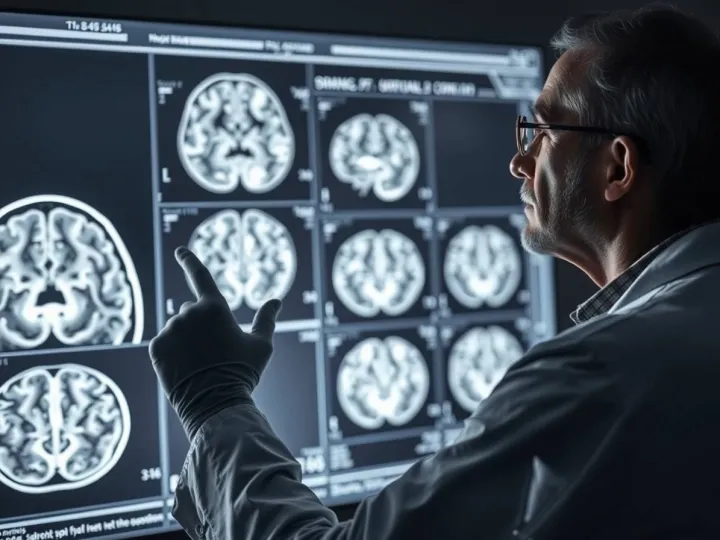
Researchers from the University of the Sunshine Coast designed a study to find out, comparing younger and older adults as they performed matched visual perception and short-term memory tasks while their brain activity was recorded through electroencephalography (EEG). Both groups achieved similar task accuracy, suggesting that their basic cognitive performance remained comparable. However, a deeper analysis revealed a striking divergence in metacognitive efficiency - the accuracy with which participants judged their own performance.
Younger adults maintained strong metacognitive sensitivity across both perception and memory, meaning they could accurately evaluate when they were right or wrong. Older adults, however, showed selective decline: their memory-based self-evaluations remained intact, but their perceptual metacognition weakened. This split suggested that aging does not simply erode metacognition globally - instead, it selectively reshapes how the brain monitors different domains of thought.
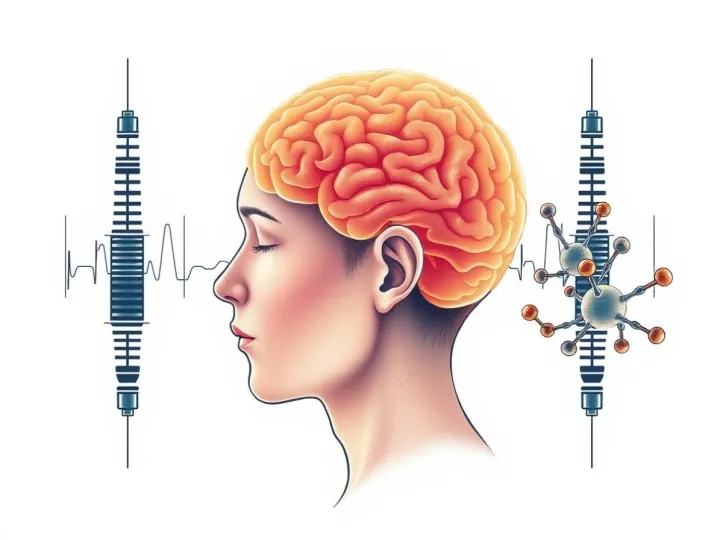
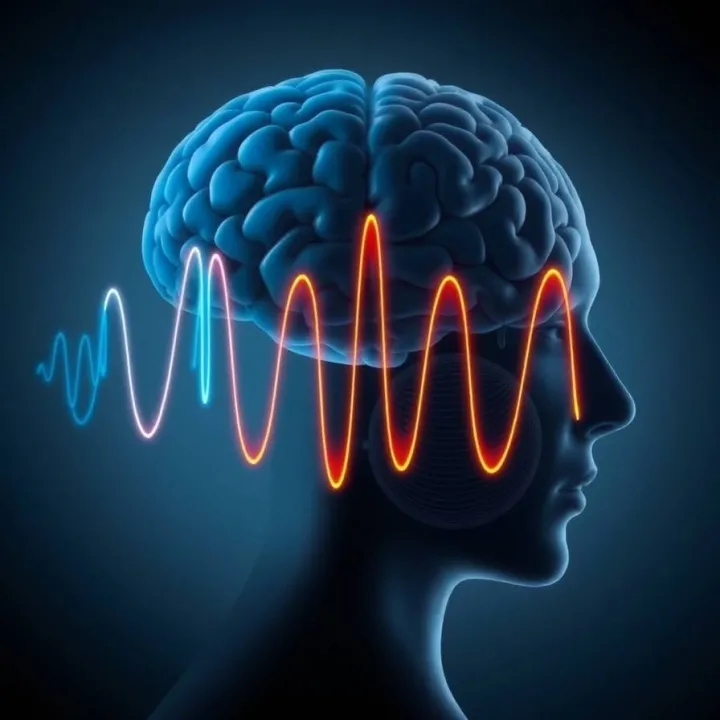
The EEG data provided a window into this transformation. In younger participants, perceptual metacognition was supported by synchronized theta oscillations in the occipital cortex - rhythmic patterns that bind visual information with awareness. Theta waves are often described as the brain's "integrative rhythm," coordinating sensory processing and reflective evaluation. In the older group, these occipital theta patterns were markedly weaker. To compensate, older adults engaged higher-order frontal regions, showing strong beta-band desynchronization, a sign of executive effort and cognitive control. This shift from automatic sensory monitoring to deliberate executive processing suggested that the aging brain preserves function by rerouting introspection through different neural frequencies.
During memory tasks, the story changed again. Both age groups displayed alpha and beta desynchronization - neural signatures associated with retrieval, attention, and the gating of stored information. For older adults, occipital alpha desynchronization played a particularly important role in maintaining metacognitive accuracy, allowing them to rely on top-down attention rather than direct sensory evaluation. In other words, while perceptual awareness faded, reflective memory awareness remained stable, powered by a different oscillatory mechanism.
These findings reveal that metacognition is not governed by a single universal mechanism but instead by a dynamic network of domain-specific rhythms tuned to different cognitive processes. Theta oscillations underpin perceptual self-monitoring, while alpha and beta bands coordinate memory-based reflection. With aging, the brain transitions from localized sensory-based feedback loops to more distributed, control-oriented oscillations - a form of neural compensation that preserves introspection, though at a higher energetic cost.
Interestingly, the study also found that while older adults' metacognitive confidence (their overall sense of certainty) remained similar to younger adults, their alignment between confidence and accuracy diminished. This suggests that they may feel just as sure of their judgments, even when those judgments become less reliable - a subtle but important shift in self-perception that may explain why older adults sometimes overestimate their performance in sensory or perceptual tasks.
The researchers propose that this neural reorganization reflects an adaptive strategy. As sensory fidelity declines with age, the brain compensates by recruiting higher-level executive regions, effectively "thinking about thinking" more actively. The cost, however, is reduced efficiency - a slower, more deliberate form of introspection replacing the effortless perceptual awareness of youth.
From a broader perspective, these findings illuminate how self-awareness evolves across the lifespan. Rather than a uniform decline, aging reveals a redistribution of cognitive control - a gradual migration of metacognitive authority from the back of the brain to the front, from rhythm to structure, from automatic resonance to reflective command.
In younger minds, theta waves weave perception and confidence into a seamless flow. In older minds, beta rhythms impose order when that flow weakens - a neural echo of wisdom compensating for lost immediacy.
Seven Reflections' Dimensional Systems Architecture (DSA) framework interprets this shift as evidence of a fundamental reorganization in the consciousness feedback loop. Metacognition depends on recursive resonance - the brain's ability to reprocess its own signals through layered feedback fields. When occipital theta (representing dynamic self-reference) weakens, the system stabilizes itself through frontal beta (representing structural oversight).
In essence, aging doesn't merely slow cognition - it transforms the architecture of consciousness, showing how self-awareness adapts to maintain coherence even as the underlying resonance shifts.