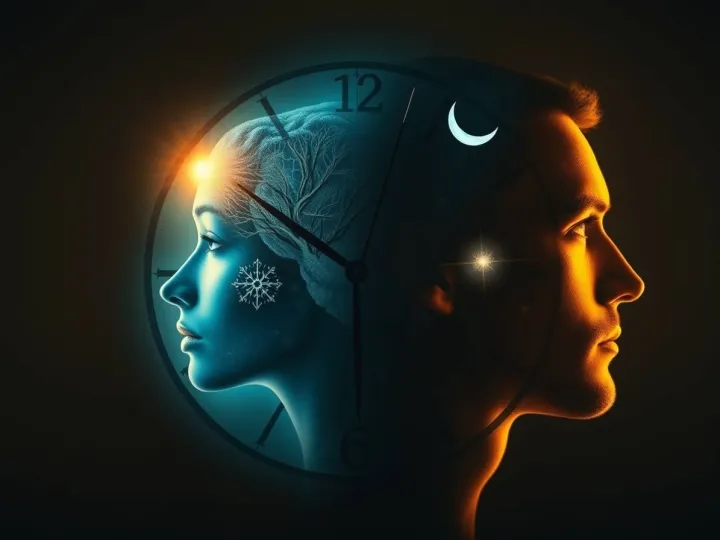
Stress signals as pulsing glucocorticoids, with gentle color contrasts and a dreamlike, ethereal atmosphere

The Pulse of Stress: How Hormone Rhythms Protect the Brain from Burnout

Stress hormones pulse through the body in waves. New research shows these rhythms keep brain receptors sensitive by balancing activation and recovery - a discovery that could reshape how we understand stress, resilience, and steroid therapy.

September 17, 2025 in Cognitive Science


Stress is often imagined as a flood of hormones overwhelming the body. But in reality, stress signals arrive in pulses - short bursts of glucocorticoids that rise and fall across the day. A new study in Endocrinology uncovers the molecular secret of why this rhythm matters: it prevents the brain's stress receptors from burning out.

Researchers from the University of Bristol show that each pulse of glucocorticoids triggers a chemical tagging process on glucocorticoid receptors (GRs) known as SUMOylation. This tag acts like a timer: it marks receptors for degradation, limiting how long they can signal. If hormone levels stayed constantly high, receptors would vanish too quickly, leaving cells unresponsive - a state known as hormone resistance.

But the body has a safeguard. Between pulses, hormone levels drop to low troughs. These quiet intervals give cells time to rebuild their receptor pool, restoring sensitivity for the next wave. In other words, stress hormones don't just deliver a message - their pattern of peaks and valleys encodes instructions that keep the system resilient.

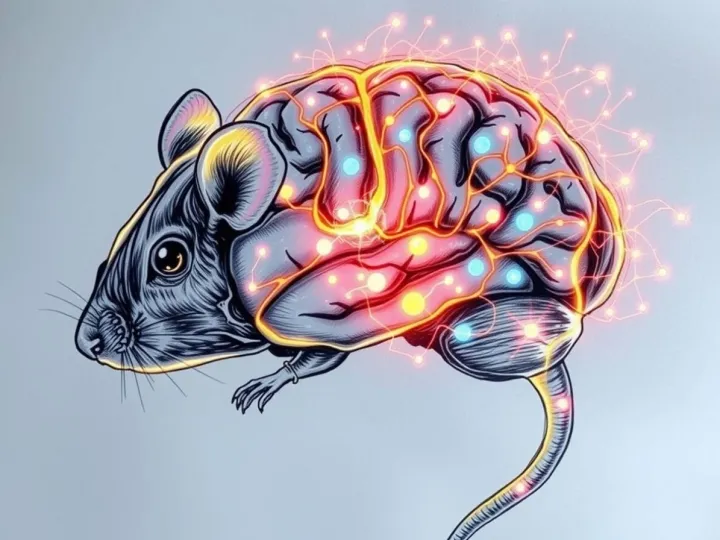
The team confirmed this by testing both cultured human cells and rat brains. They found that when animals were exposed to natural oscillations of corticosterone (the rodent equivalent of cortisol), GR SUMOylation rose and fell in step with the hormone rhythm. In contrast, when rats received the synthetic glucocorticoid methylprednisolone, which delivers constant exposure, the normal SUMOylation pattern was disrupted and receptor sensitivity collapsed.

The implications ripple far beyond basic biology. Glucocorticoids are widely prescribed for inflammation, asthma, and autoimmune disease, but long-term therapy often leads to resistance and side effects. This research suggests why: continuous hormone exposure erodes receptor balance. Pulsatile dosing - mimicking the body's natural rhythms - may one day improve treatment outcomes.

The study also highlights a broader principle: biology is written in rhythms, not just amounts. Just as heartbeats and brain waves carry meaning in their timing, stress hormones preserve homeostasis by pulsing, not pouring. Disrupting these rhythms - through chronic stress, shift work, or blunt drug regimens - risks destabilizing systems that rely on oscillation for resilience.


What Is SUMOylation?

SUMOylation is a molecular modification in which proteins are tagged with small SUMO molecules (Small Ubiquitin-like Modifier). For glucocorticoid receptors, SUMOylation serves as a kind of "off-switch" - triggering their degradation after activation. This prevents runaway signaling but also means that too much hormone for too long will deplete the receptors completely. Pulses keep this balance intact, allowing recovery windows between activations.


References

Caroline A Rivers, Heyam Abdulqayoom, Yvonne M Kershaw, Oliver R Troy, at al. (2025). Glucocorticoid receptor and SUMO fluctuations in response to pulsatile glucocorticoids in vitro and in male rat brains. [Endocrinology] https://doi.org/10.1210/endocr/bqaf140...

How Cortisol Shapes the Mind: Stress, Cognition, and the Science of Consciousness
Sep 3, 2025 Cognitive Science

How Cortisol Shapes the Mind: Stress, Cognition, and the Science of Consciousness

We often think of cortisol as the "stress hormone." But beyond fight-or-flight, cortisol quietly regulates how we think, remember, and make decisions. When its rhythm breaks, so does the clarity of our consciousness. New research on adrenal cortisol insufficiency reveals why hormone balance may be central not only to physical health, but also to how we experience mind itself.

How Diet Rewires the Brains Response to a Key Metabolic Hormone
Nov 25, 2025 Nutrition

How Diet Rewires the Brain's Response to a Key Metabolic Hormone

A new study in Endocrinology maps how the brain responds to FGF21 - a liver-derived hormone central to metabolic regulation - and reveals that diet dramatically reshapes its effects. Researchers found that FGF21 activates metabolic centers in the hypothalamus under normal feeding but triggers widespread neuronal responses across sensory, reward, and reproductive regions in high-fat - diet mice. Critically, obesity impaired the hormone's ability to stimulate key metabolic nuclei, suggesting selective central resistance to FGF21's signaling.

GLP-1 and the Biology of Desire: A New Frontier in Treating Addiction
Oct 10, 2025 Neuroscience & Health

GLP-1 and the Biology of Desire: A New Frontier in Treating Addiction

What if addiction isn't just psychological, but metabolic - a feedback loop between hunger, energy, and awareness? New research in the Journal of the Endocrine Society shows that GLP-1, the same hormone behind the global weight-loss revolution, may also reshape how the brain processes craving and reward. As scientists uncover the hormone's role in modulating dopamine and stress pathways, a new picture of addiction is emerging: one where biology, behavior, and consciousness share the same circuitry.

A Dopamine Drug Helped Her Heal - Until It Rewired Her Mind
Nov 10, 2025 Cognitive Science

A Dopamine Drug Helped Her Heal - Until It Rewired Her Mind

A case published in JCEM Case Reports highlights an unusual but critical side effect of the dopamine agonist cabergoline: pathological gambling leading to recurrent adrenal crises. The report describes a 34-year-old woman with acromegaly who developed impulse control disorder behaviors while on long-term cabergoline therapy. After discontinuing the drug, her compulsive gambling and anxiety resolved within two weeks - and her life-threatening adrenal crises subsided dramatically.

Women and Winter Nights: How Sex and Season Change the Brains Response to Light
Nov 11, 2025 Sleep & Dreaming

Women and Winter Nights: How Sex and Season Change the Brain's Response to Light

A new open-access study in the Journal of the Endocrine Society reveals that the body's response to light - how it suppresses melatonin and regulates alertness - depends not just on brightness but on biology and season. Women showed greater melatonin suppression but less alertness in response to moderate light than men, while both sexes were more light-sensitive in winter than in summer. The findings suggest that personalized lighting strategies could improve sleep, mood, and circadian health year-round.