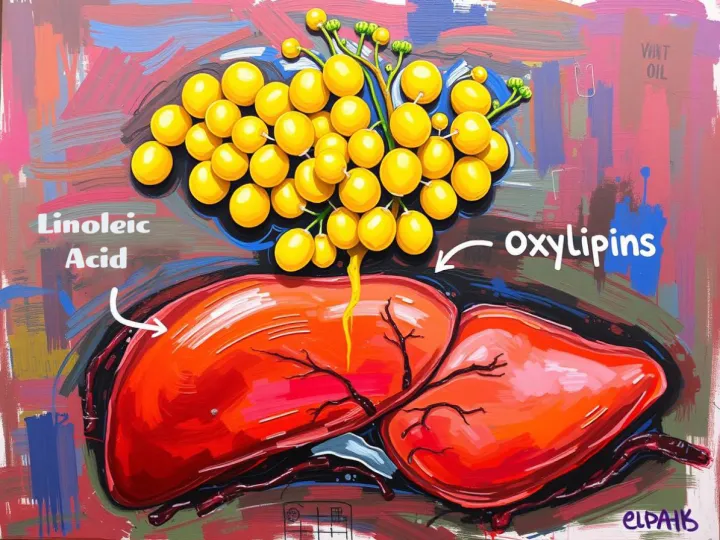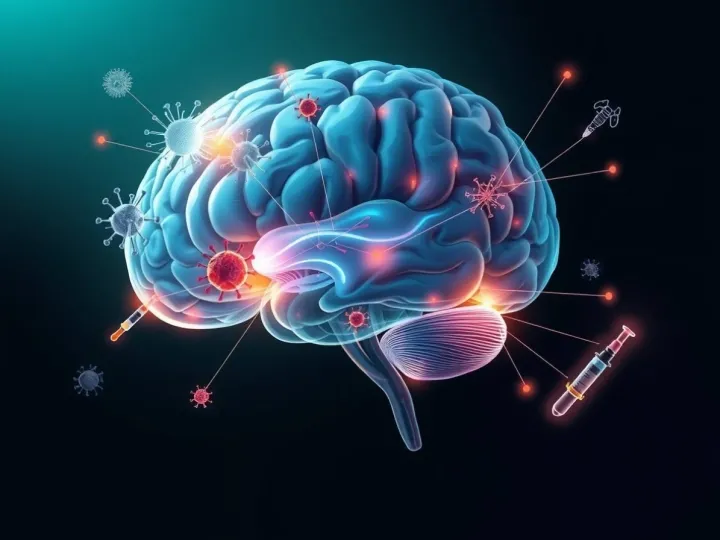
Fibroblast growth factor 21 (FGF21) has emerged as one of the most intriguing metabolic hormones discovered in recent years. Produced mainly by the liver, FGF21 influences appetite, nutrient preference, thermogenesis, and systemic energy regulation. Because it can cross the blood - brain barrier and activate specific receptor complexes in the central nervous system, it is considered a promising therapeutic candidate for obesity and metabolic diseases.
A new study published in Endocrinology deepens this view by providing a detailed whole-brain map of neuronal activity in response to FGF21 - and by showing that the brain's response is strongly shaped by diet. While previous research identified the distribution of FGF21's receptor FGFR1c and its co-receptor ?-Klotho, few studies have examined how actual neuronal activation patterns shift across brain regions under different metabolic states.
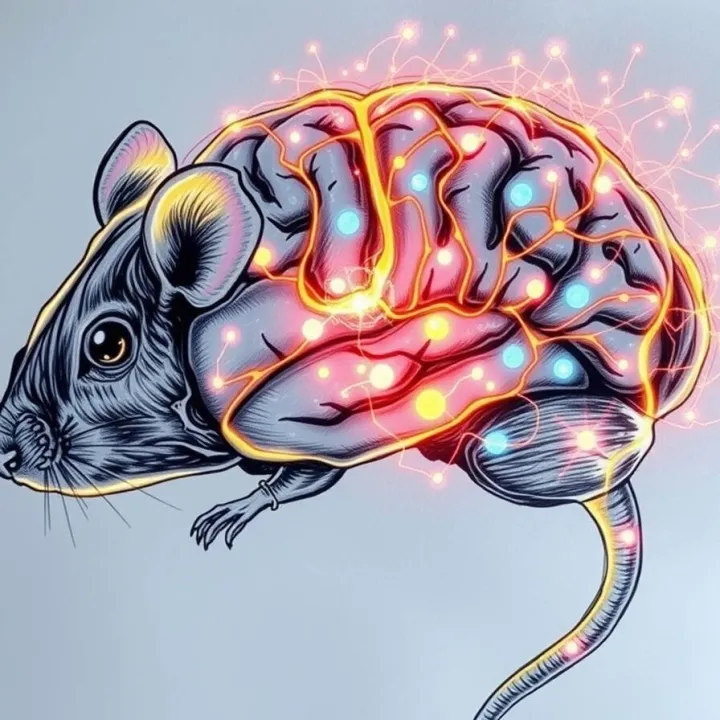
The researchers used brain-wide activity mapping to compare how normal-chow mice and high-fat-diet (HFD) mice process exogenous FGF21. Their findings reveal two major insights. First, FGF21 engages entirely different networks depending on an animal's nutritional environment. Second, obesity seems to induce a form of selective central resistance - FGF21 continues to activate some regions but loses its ability to stimulate key metabolic nuclei, including the periventricular hypothalamic nucleus (PVNp), a hub with established metabolic functions.
Under normal dietary conditions, FGF21 produced a relatively focused pattern of neuronal activation. The hormone increased activity in hypothalamic regions tightly linked to homeostasis, appetite regulation, and nutrient sensing. This aligns with previous evidence showing that FGF21 acts through the hypothalamus to influence feeding behavior and macronutrient preference. Interestingly, the study also found reductions in cortical activity, especially in regions involved in cognition. This inhibitory effect may reflect a shift toward reinforcing metabolic control pathways when FGF21 levels rise.
The picture changed dramatically in animals fed a prolonged high-fat diet. HFD mice displayed elevated baseline neuronal activity in regions related to sensory processing, memory, and reward - mirroring known signatures of diet-induced changes in dopaminergic and limbic systems. Against this altered landscape, FGF21 produced a far broader activation pattern. Instead of acting primarily on metabolic centers, it activated additional areas involved in reproduction, thermoregulation, sensory integration, and arousal.
This expansion of FGF21-responsive regions suggests that obesity shifts the hormone's signaling priorities or, alternatively, that the brain's metabolic circuitry becomes less selective under diet-induced dysregulation. However, the most consequential finding is where FGF21 signaling failed - its ability to activate the PVNp and other core metabolic nuclei was impaired. This indicates a selective central resistance to FGF21: some pathways remain responsive, but others, potentially the ones most vital for restoring metabolic balance, become attenuated.
Selective resistance adds nuance to the idea of universal hormone resistance in obesity. Rather than losing global sensitivity, the brain retains responsiveness in circuits linked to sensory and emotional processing while losing responsiveness in metabolic hubs. This asymmetry could help explain why metabolic disorders are often accompanied by stronger reward-driven eating behaviors and an altered motivational landscape.
The notion of diet-dependent hormone signaling also raises questions about therapeutic use. If key hypothalamic targets become resistant under obesity, exogenous FGF21 analogs - currently in development for metabolic disease - may require strategies to bypass or restore these central pathways. Understanding which circuits retain sensitivity may help refine therapeutic action or guide combination treatments that re-sensitize hypothalamic nuclei.
The study also supports a broader biological principle: metabolic hormones do not act in fixed patterns. Their impact depends on the state of the organism - including nutritional, endocrine, and neurological conditions. Obesity alters neuronal excitability, neuroinflammation, synaptic plasticity, and neurotransmitter balance, all of which change how signals are interpreted. FGF21's altered neural footprint reflects these systemic shifts.
Diet-induced changes in neural activity also highlight how deeply feeding patterns reshape the brain. High-fat diets are known to modify sensory processing and reward pathways, often reinforcing preferences for energy-dense foods. The new findings point to a structural basis for this effect: widespread increases in HFD-induced neuronal excitability across sensory and limbic circuits. When FGF21 is introduced into this altered network, its effects ripple through a far more expansive set of targets.
Taken together, the study paints a picture of a hormone whose signaling is not only powerful but highly context-dependent. Its metabolic actions are clearest in healthy, well-regulated neural environments. When diet disrupts these networks, FGF21's influence becomes fragmented and its engagement with metabolic centers weakened.
From the perspective of Seven Reflections' Dimensional Systems Architecture (DSA), the study illustrates how metabolic signals operate within a complex field of neural states. FGF21 does not simply activate fixed pathways; its effects propagate across a dynamic, state-dependent field whose configuration is altered by diet. Under high-fat feeding, the neural field becomes noisier, with elevated baseline activity in reward, sensory, and memory circuits. This increases the system's entropy and shifts the resonance patterns through which FGF21 can exert influence.
DSA emphasizes that system-level behavior changes when field coherence is lost. The observed selective resistance in hypothalamic nuclei resembles a breakdown in field alignment: metabolic hubs lose synchrony while peripheral networks remain highly responsive. FGF21's disrupted influence under obesity reflects a mismatch between hormonal input and neural field structure - a state in which signals propagate along unintended pathways, amplifying some circuits while leaving others inert. This insight underscores how physiological signals must be understood in terms of field dynamics, not isolated linear pathways.