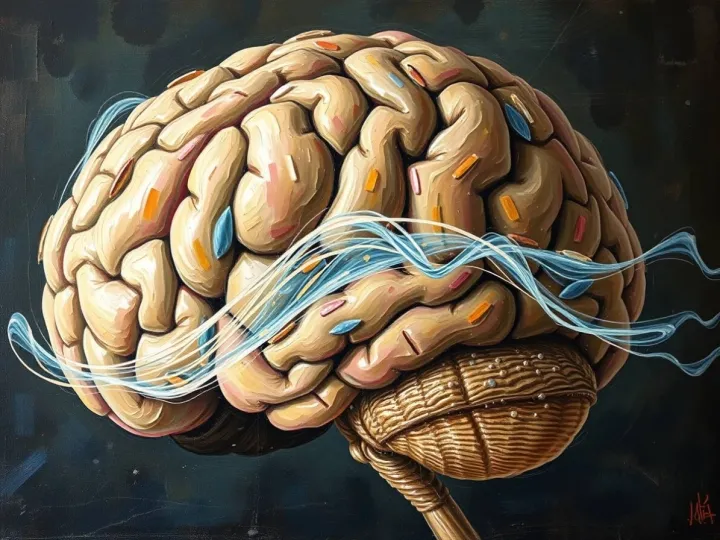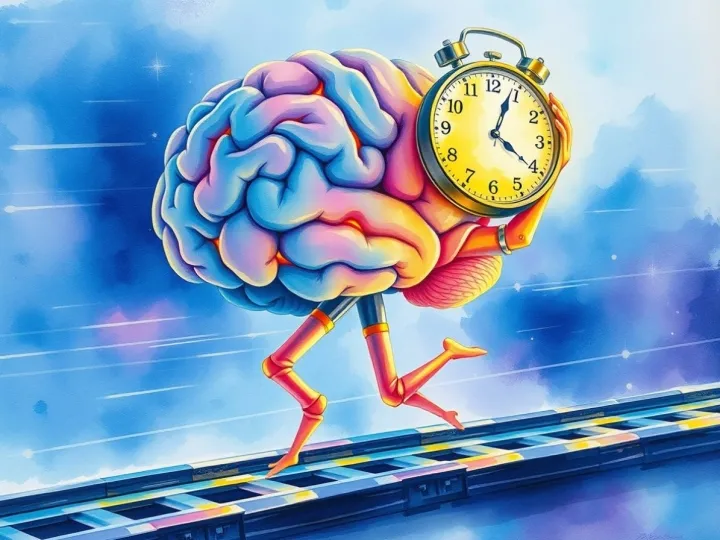
Most people know cortisol as the hormone that rises under stress. But science shows it does much more: cortisol orchestrates memory, attention, and executive function - the mental processes that shape our sense of clarity and control. When cortisol levels become dysregulated, cognition itself can fragment, leading to what many describe as brain fog, poor memory, or difficulty making decisions.
Cortisol and the Architecture of Cognition
Recent studies on adults with adrenal cortisol insufficiency (ACI) highlight how fragile the link between hormones and cognition really is. Patients with ACI often report cognitive dysfunction, particularly in memory and executive function. Yet research has struggled to reach consistent conclusions. Why? Because cortisol isn't just a chemical - it follows circadian and ultradian rhythms, rising and falling across the day. Current medical treatments rarely replicate this natural rhythm, leaving the brain out of sync.
Stress, Flow, and the Fragile Balance
When cortisol is too high, attention narrows into survival mode. When it's too low, motivation and focus collapse. The "sweet spot" lies in balance - the same balance people seek in meditation, flow states, or altered states of consciousness. In that sense, cortisol functions as a biological gateway, determining whether the mind is scattered, focused, or transcendent.
Beyond Hormones: The Wider Web of Influence
Cognition in ACI isn't only shaped by cortisol itself. The mind is never regulated by a single molecule, but by the interplay of many biological rhythms. Sleep is one of the strongest partners in this dance. When circadian cycles are disrupted, memory consolidation suffers, attention becomes fragile, and emotional regulation weakens. Patients with ACI often report insomnia or irregular sleep patterns, which can amplify the very cognitive symptoms that treatments aim to relieve.
Metabolism also plays a role. Cortisol influences glucose balance, and glucose is the brain's primary fuel. Fluctuations in blood sugar can trigger mental fatigue or short-term lapses in concentration, which are easily mistaken for memory loss. Add cardiovascular health, mood disorders such as depression or anxiety, and the side effects of long-term medication, and you have a web of influences that makes each patient's experience unique.
The challenge for researchers is that neurocognitive testing was designed for controlled populations, not for people navigating multiple, overlapping health issues. A test that appears to measure memory may in fact be measuring fatigue, disrupted sleep, or emotional strain. This complexity explains why studies on ACI yield uneven results - but it also points to a deeper truth. The mind cannot be separated from the body's rhythms, and stress hormones are only one thread in a larger tapestry of consciousness.
Toward a Science of Rhythm and Mind
If cortisol research has revealed anything, it is that cognition is not static. Thought itself rises and falls with the body's internal clocks. Future studies are beginning to move beyond one-size-fits-all hormone replacement, exploring treatments that mimic the body's natural circadian and ultradian pulses. Instead of flat doses of glucocorticoids, the goal is to restore the rhythm - to let the body's chemistry breathe in patterns that match the cycles of day and night.
This shift has implications far beyond endocrinology. It suggests that the science of consciousness must also become a science of rhythm. Just as music depends on timing, the brain depends on precise oscillations of hormones, sleep stages, and neural firing patterns. Researchers are calling for cognitive studies that integrate these layers - mapping not just performance on a test, but the biological and temporal context in which thought occurs.
For now, the insight is simple but profound: the way hormones rise and fall shapes how thought itself emerges. To understand the architecture of consciousness, we must study not only the brain, but the body's rhythms - the silent metronomes of mind.
Takeaway
Cortisol is far more than a stress hormone - it is a conductor in the body's orchestra of rhythms. When its pattern is steady, memory sharpens, focus deepens, and consciousness feels coherent. When the rhythm falters, the mind fragments into fatigue, distraction, or fog. Research on adrenal cortisol insufficiency reminds us that cognition cannot be explained by brain chemistry alone. Sleep cycles, metabolism, emotional states, and even the timing of medication all weave together to shape how thought appears in awareness.
The lesson is both scientific and personal: consciousness is rhythm. By paying attention to how stress, rest, and daily cycles move through us, we begin to see cognition not as a fixed ability but as a living, breathing process. Balance the rhythm, and clarity follows. Disrupt it, and the very architecture of mind begins to shake.
Frequenty Asked Questions
What does cortisol do to memory?
Cortisol regulates how memories are formed and retrieved. Too much or too little can impair recall and focus.
Can stress hormones affect consciousness?
Yes. Cortisol rhythms influence attention, executive function, and even our ability to enter flow states.
Why is circadian rhythm important for cognition?
Cortisol naturally follows a daily rhythm. When that rhythm is disrupted, cognitive clarity and decision-making suffer.