Dreams have fascinated philosophers, scientists, and storytellers for millennia. Yet for all their cultural importance, dreams remain scientifically elusive, fleeting away the moment we wake. For decades, the only way to study dreams was to wake people at night and ask them to describe what they had been experiencing - a slow, subjective, and inconsistent process. Now, researchers in Japan and Norway have taken a major step toward changing that.
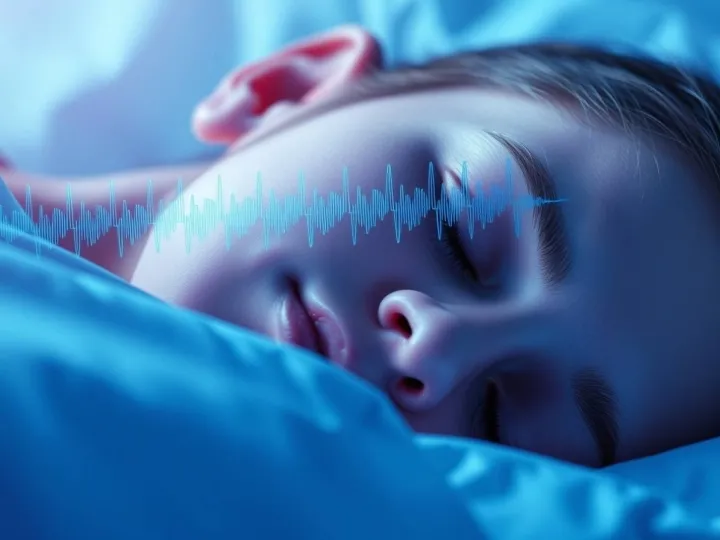
A new study published in SLEEP Advances shows that machine learning models, trained on electroencephalography (EEG) brainwave data, can accurately identify when a person is dreaming during stage 2 of non-REM sleep. Even more striking, these models retain much of their accuracy when the number of EEG sensors is dramatically reduced, paving the way for practical, low-cost, wearable dream-detection devices.
Cracking the Code of Non-REM Dreams
When we think of dreaming, most of us picture rapid eye movement (REM) sleep, the vivid stage linked to story-like dream sequences. But research has shown that dreams occur during non-REM stages as well, particularly in stage N2, which makes up about half of total sleep time. Unlike REM, non-REM dreams are harder to detect because they don't come with the telltale eye movements or brain signatures that make REM easier to identify.
The team led by Luis Alfredo Moctezuma at the University of Tsukuba, in collaboration with Marta Molinas at the Norwegian University of Science and Technology, set out to see whether subtle EEG signals could reveal the presence of dreams in non-REM sleep. They used a public dataset from the DREAM project, which includes hundreds of awakenings from 36 healthy volunteers. Each participant was roused at random intervals during stage N2 and asked whether they had just been dreaming or not.
Training Machines to Spot Dreams
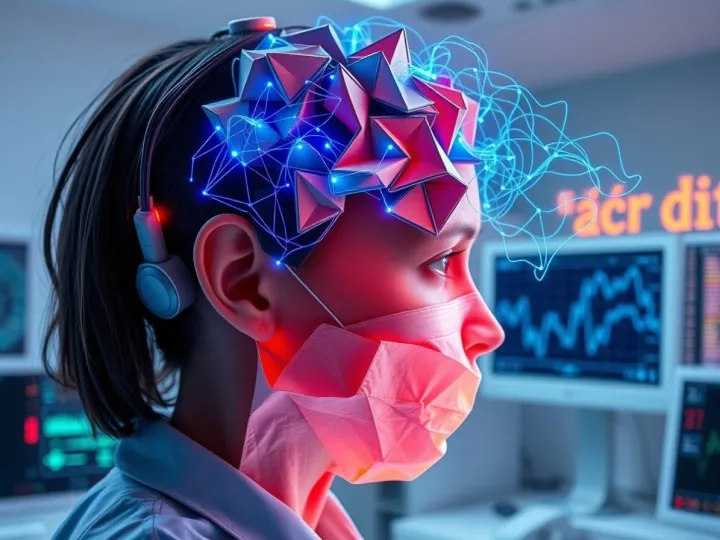
Using high-density EEG recordings with 256 electrodes, the researchers trained machine learning algorithms to distinguish between dream experiences (DE) and no experiences (NE). The models relied on advanced feature extraction methods, including Common Spatial Patterns (CSP) and principal component analysis, to capture subtle patterns in brain activity.
The results were remarkable: with full high-density EEG, the system achieved up to 94% accuracy in classifying dream versus no-dream states, with an area under the ROC curve (AUROC) of 0.97. That level of performance rivals or surpasses many current applications of brain - computer interface technology.
But high-density EEG is impractical for everyday use. Nobody wants to go to bed wearing a 256-electrode cap outside of a research lab. The real breakthrough came when the team tested channel-reduction strategies. By using permutation-based selection and frequency-of-use analyses, they discovered that reducing the system to around 30 - 40 strategically placed electrodes preserved much of the performance. Even more intriguingly, dropping some electrodes in the occipital region - the brain's visual processing center - slightly improved accuracy, suggesting that not all brain areas contribute equally to detecting dream states.
Why This Matters
Automatic dream detection could transform both sleep research and clinical practice. Right now, studying dreams requires elaborate lab setups and repeated awakenings, which can bias the results. A wearable system capable of continuously monitoring dream states would allow scientists to gather large, objective datasets without disturbing the sleeper.
For psychiatry, this could be a game-changer. Nightmares are central to conditions like PTSD, narcolepsy, and nightmare disorder. Objective dream detection could help measure treatment effectiveness, guide targeted therapies, and even enable closed-loop interventions - where a device recognizes when someone is in a nightmare and delivers a cue to shift the dream or wake the sleeper.
Beyond pathology, this research opens a window into fundamental neuroscience. Dreams are thought to play roles in memory consolidation, emotional regulation, and creativity. Being able to detect them automatically and non-invasively allows for much more precise studies of how dreaming interacts with waking cognition.
The Road to Everyday Devices
The study also points toward future consumer applications. Just as wearable trackers now monitor steps, heart rate, and REM cycles, tomorrow's sleep headbands might detect dream states in real time. Imagine being able to log not just how long you slept, but how often you dreamed - or even to train lucid dreaming through feedback systems.
There are still challenges. The current study relied on carefully preprocessed data, and performance dropped when reducing electrode counts too far below 35. Researchers will need to refine algorithms that work robustly on noisier, real-world signals. Ethical questions also loom: should dream activity be monitored in everyday life, and who owns that data?
Still, the trajectory is clear. High-accuracy, low-density EEG dream detection is no longer science fiction. It is an emerging tool that could reshape how we understand - and even interact with - the mysterious world of dreams.
A Glimpse Into the Future
What excites many in the field is not just the ability to say "yes" or "no" about dreaming, but the possibility of decoding dream content itself. Previous studies have used fMRI and deep learning to reconstruct dream imagery, but EEG-based approaches are faster, cheaper, and more portable. The new study lays the groundwork for bridging subjective reports with objective measures, giving science its first reliable "dream detector."
Dreams have always hovered between science and mystery. With the help of machine learning, they are moving closer to measurable reality. As researchers continue to refine these tools, the boundary between the seen and the unseen mind may grow thinner - allowing us, for the first time, to truly watch ourselves dream.