The only son of Prince Andrew of Greece and Denmark and Princess Alice of Battenberg, Philip belonged to the Greek royal family, a branch of the wider house of Glücksburg. Political upheaval forced the family into exile when he was an infant, and his childhood was unsettled: his parents separated, his mother was later institutionalized, and his sisters married into German nobility while he was sent to schools in France, Germany, and Britain. He eventually attended Gordonstoun in Scotland and then the Royal Naval College at Dartmouth, where his aptitude for the sea took shape.
Philip joined the Royal Navy in 1939 and served throughout World War II, seeing action in the Mediterranean and the Pacific. He was mentioned in dispatches for his role in the Battle of Cape Matapan and was aboard a destroyer during the Allied landings in Sicily. By the war's end he had risen to the rank of lieutenant commander, and his naval service remained a source of professional pride throughout his life.
His courtship of Princess Elizabeth, heir to the British throne, led to their marriage in 1947 at Westminster Abbey. Before the wedding he renounced his Greek and Danish titles, took the surname Mountbatten, and was created Duke of Edinburgh. When Elizabeth became queen in 1952, he gave up his active naval career to serve as her consort, accompanying her on state visits and representing the Crown at ceremonies around the world. In 1956 he established the Duke of Edinburgh's Award to recognize young people's achievements in service, skills, and physical challenges, and he became a prolific patron of scientific, sporting, and conservation organizations.
Known for his candor and sometimes controversial offhand remarks, Philip carried out thousands of engagements well into old age, retiring from public duties in 2017 at the age of 96. He died in April 2021 at Windsor Castle, and his funeral, scaled down because of pandemic restrictions, drew wide attention for the quiet dignity of its ceremony. He was survived by the queen, who died the following year.
Prince Philip was born on June 10, 1921. In Cardology (Destiny Cards), June 10, 1921 corresponds to the Seven of Diamonds, making the Seven of Diamonds his Birth Card.
In numerology, the name adds another layer to the birth-date profile. The letters of a person’s name are used to explore inner motivation, personality, expression, and the qualities they bring into relationships and everyday life. Explore how his original name Prince Philip of Greece and Denmark influences his life and personality.
Prince Philip Personal Life
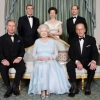
Prince Philip & Queen Elizabeth II
Compatibility: Seven of Diamonds & King of Clubs
Famous Gemini People
Discover famous Gemini people, from actors and musicians to writers, athletes, and historical figures. Explore their birthdays and biographies, and see who shares the Gemini zodiac sign.



View All Famous Gemini People →

Seven of Diamonds Famous People

View All Famous Seven of Diamonds People →