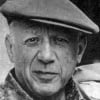
Johann Kaspar Schmidt, who wrote under the name Max Stirner, grew up in Bayreuth, Bavaria, where his father, a maker of musical instruments, died when the boy was an infant. His mother later remarried, and the family moved within Germany. An intellectually serious student, he attended the University of Berlin and later studied at Erlangen and Königsberg, focusing on philology, theology, and philosophy. In Berlin he heard the lectures of G.W.F. Hegel, whose dialectical method shaped the intellectual climate in which Stirner would later work.
After failing to secure a university post, Stirner settled in Berlin and taught at a private school for girls. He joined a circle of radical young thinkers known as the "Free Ones," which included Bruno Bauer and others associated with the Young Hegelian movement. He wrote for newspapers and journals, but his reputation rests on a single book. In 1844 he published The Ego and Its Own (Der Einzige und sein Eigentum), an uncompromising attack on religion, state authority, and every moral system that asks the individual to serve something beyond himself.
The book argued that all ideals - God, humanity, society, the common good - are fixed ideas, or "spooks," that subordinate the unique individual, or ego, to abstract powers. Stirner rejected even the label "egoist" as merely a mask for something higher. The work drew fierce responses, notably from Karl Marx and Friedrich Engels, who devoted a large part of The German Ideology to demolishing it. Though it sold modestly during his lifetime, The Ego and Its Own became a foundational text for later individualist anarchism and a touchstone for critics of collectivism and moral absolutism.
Stirner's personal life was marked by poverty and loss. He married Agnes Butz, who died in childbirth, and later Marie Dähnhardt, from whom he separated. His book brought interest but little money, and he spent his remaining years in straitened circumstances, working intermittently as a translator and journalist. He died in Berlin in 1856, at age 49, after an infected insect bite led to complications. His ideas were rediscovered by later generations and influenced anarchist and existentialist thought, even as his unsettling rejection of all authority kept him at the margins of academic philosophy.
Max Stirner was born on October 25, 1806 in Bayreuth, Bavaria, Germany. In Cardology (Destiny Cards), October 25, 1806 corresponds to the Ten of Hearts, making the Ten of Hearts his Birth Card.
In numerology, the name adds another layer to the birth-date profile. The letters of a person’s name are used to explore inner motivation, personality, expression, and the qualities they bring into relationships and everyday life. Explore how his original name Johann Kaspar Schmidt influences his life and personality.
Famous Scorpio People
Discover famous Scorpio people, from actors and musicians to writers, athletes, and historical figures. Explore their birthdays and biographies, and see who shares the Scorpio zodiac sign.