Von Neumann grew up in a prosperous, assimilated Jewish family in Budapest, where his father was a lawyer and banker. He showed extraordinary mathematical ability as a child, impressing adults with feats of memory and mental calculation, and was tutored in advanced mathematics while still in secondary school. Recognizing his talent, his parents encouraged a practical education alongside his mathematical interests.
He studied chemical engineering in Berlin and Zurich, earning a diploma from the Swiss Federal Institute of Technology (ETH) in Zurich in 1925, while simultaneously pursuing a doctorate in mathematics at the University of Budapest, which he received in 1926. He then worked at the University of Berlin and spent time in Göttingen, where he absorbed the emerging ideas of quantum theory and made early contributions to set theory and the mathematical foundations of quantum mechanics.
In 1930 he moved to the United States to teach at Princeton University, and in 1933 he became one of the first professors at the newly founded Institute for Advanced Study. His 1932 book Mathematical Foundations of Quantum Mechanics gave the new physics a rigorous mathematical framework, and his work on operator theory and what became known as von Neumann algebras influenced both mathematics and physics.
With economist Oskar Morgenstern he published Theory of Games and Economic Behavior in 1944, a landmark work that founded modern game theory. During World War II he served as a consultant at Los Alamos, where his calculations contributed to the implosion design of the atomic bomb. After the war he turned to computing, helping to design the stored-program concept described in the EDVAC report and the IAS machine, and developing the Monte Carlo method for numerical simulation.
In his final years he explored cellular automata and self-reproducing machines and served on government and scientific advisory bodies. He received the Presidential Medal of Freedom in 1956. He married twice, and his daughter Marina von Neumann Whitman became an economist. Von Neumann died of cancer in 1957, at the height of a career that reshaped mathematics, physics, economics, and computing.
John von Neumann was born on December 28, 1903 in Budapest, Budapest, Hungary. In Cardology (Destiny Cards), December 28, 1903 corresponds to the Three of Hearts, making the Three of Hearts his Birth Card.
In numerology, the name adds another layer to the birth-date profile. The letters of a person’s name are used to explore inner motivation, personality, expression, and the qualities they bring into relationships and everyday life. Explore how his original name Neumann Janos Lajos influences his life and personality.
John von Neumann Quotes
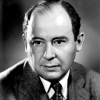
Famous Capricorn People
Discover famous Capricorn people, from actors and musicians to writers, athletes, and historical figures. Explore their birthdays and biographies, and see who shares the Capricorn zodiac sign.





View All Famous Capricorn People →
Famous People born on December 28

View All Famous People Born on December 28 →
Three of Hearts Famous People
View All Famous Three of Hearts People →