Charlotte, NC - The brutal stabbing of 23-year-old Ukrainian refugee Iryna Zarutska on the Charlotte light rail shocked the city and drew national outrage. Federal prosecutors have charged 34-year-old Decarlos Brown Jr. with committing an act of violence on a mass transportation system, a crime that could make him eligible for the death penalty. Officials describe the act as "terroristic" and the community is demanding greater security on public transit.
But beyond the court filings and political statements lies a deeper question: what happens inside the human brain when sudden, unprovoked violence occurs? Why does one person's awareness collapse into aggression while others can suppress those same dark impulses?
The instant of collapse
According to investigators, Zarutska and Brown had no prior interaction. Surveillance footage shows him seated for several minutes before pulling out a knife, pausing, and then striking three times. That pause - those few seconds before action - highlights the fragile threshold between thought and deed.
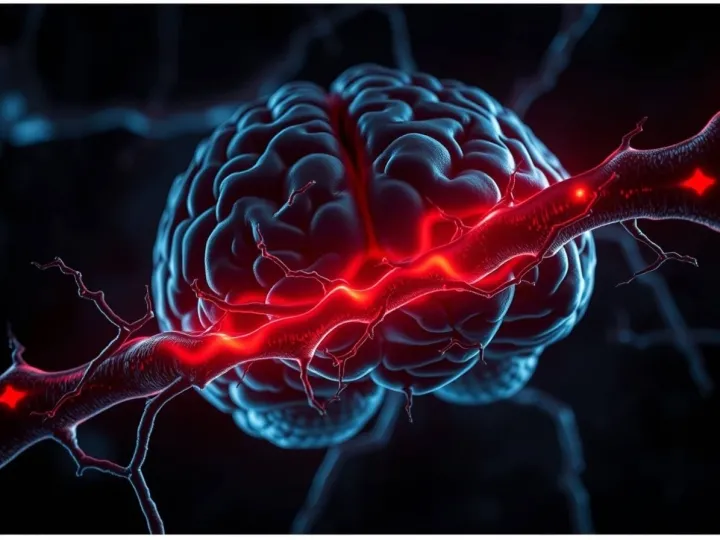
Neuroscience suggests this is a moment when the prefrontal cortex - the brain's regulator of judgment and impulse - should intervene. In healthy cognition, the prefrontal cortex suppresses signals from the amygdala and limbic system, which generate fear, anger, and aggression. But when the prefrontal brakes fail, emotional circuits seize control, and violence can erupt (Blair, 2016).
Brains under stress
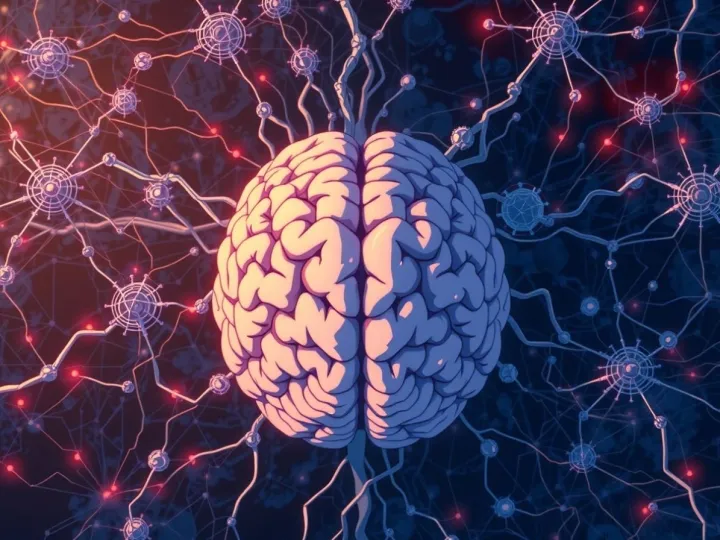
Violent behavior often emerges when bottom-up drives overwhelm top-down control. The amygdala fires in high arousal, but the prefrontal cortex is too weak to regulate it. Functional imaging studies show that in aggressive individuals, the connection between these regions can literally break down during provocation - leaving the emotional brain unchecked (Fulwiler et al., 2019).
Biology and life experience play a role here. Low serotonin levels are strongly associated with impulsive aggression, especially in individuals with criminal histories or unstable environments (Dalley & Roiser, 2012). Chronic stress and early trauma can also reshape the brain. Animal studies show that adolescent social isolation reduces inhibitory interneurons in the prefrontal cortex, permanently lowering impulse control and promoting aggression in adulthood (Cohn et al., 2022).
In Brown's case, his long criminal record - armed robbery, larceny, repeated arrests - suggests a history of stress and disconnection. While the legal system documents his actions, neuroscience suggests that years of adversity can leave deep traces in neural circuits. Each stressor may weaken the architecture of control, lowering the threshold for aggression.
Violence without provocation
What makes Zarutska's killing especially haunting is that it appears entirely unprovoked. She was simply riding home after work. Forensic psychiatry recognizes this type of attack as reactive aggression without trigger - when the aggression arises not from an external threat, but from within the assailant's own distorted state.
Studies of violent offenders show that in such moments, conscious awareness is eclipsed. The brain no longer calculates consequences or alternatives. Instead, the emotional surge dominates, and action follows with terrifying speed (Siever, 2008). This does not excuse the act - it explains the cognitive collapse that transforms thought into violence.
Cognition as the fragile barrier
Every violent act is a moral failure. But it is also a cognitive failure - a breakdown in the very systems that make us human. The ability to pause, reflect, and choose differently depends on delicate neural balances: serotonin regulating impulse, prefrontal cortex restraining emotion, functional connectivity keeping thought tethered to awareness.
When those systems falter, the results can be catastrophic. And because many of these systems are shaped by life history, trauma, and environment, the seeds of collapse may be planted long before a crime is committed.
Remembering Iryna
For Iryna Zarutska, who had survived war in Ukraine only to lose her life on American soil, the collapse of another person's awareness ended her journey. Her family has chosen to bury her in the United States - the country she loved and embraced.
Her death reminds us of two parallel truths. On one level, society must ensure safety: better transit security, stronger community vigilance. On another, deeper level, we must confront the fragile architecture of human cognition. Violence is not only about weapons and opportunity. It is about what breaks inside the brain when awareness fails and impulse takes over.