Surreal illustration of a woman looking at her phone with a split colorful brain erupting into emotional and neural symbols

How the Cerebellum Knows When Something New Is Happening

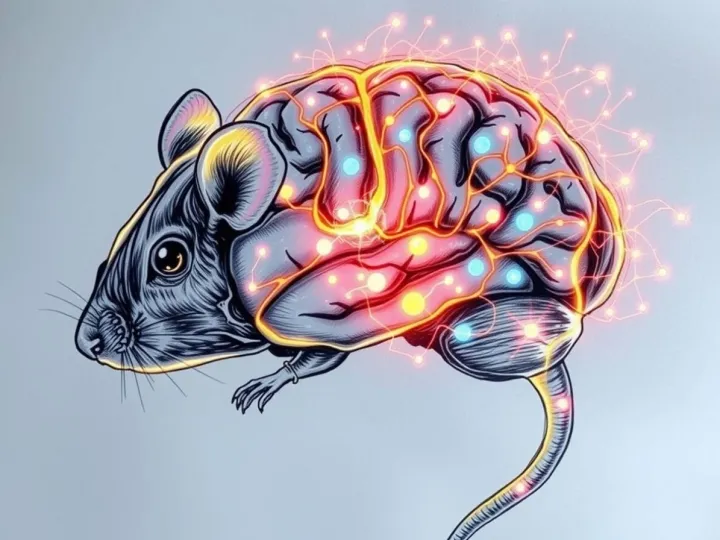
A new study in the Journal of Neuroscience reveals how the cerebellum, the brain region central to smooth movement and coordination, rapidly adapts to repeated sensory input while remaining alert to new changes. Using gentle air puffs to stimulate whisker movements in awake mice, researchers found that cerebellar responses diminish with repetition but rebound instantly when the stimulus shifts. The findings uncover how short-term synaptic plasticity helps the brain recognize novelty and adjust behavior within milliseconds.

By Seven Reflections Editorial - December 11, 2025 in Cognitive Science


Every moment, the brain receives a flood of sensory information. Yet not everything deserves equal attention. A repeated, predictable sensation quickly fades into the background, while even a small unexpected change can demand immediate action. A new study in the Journal of Neuroscience reveals how the cerebellum - one of the brain's most rapidly responding regions - manages this delicate balancing act.

Researchers studied mice receiving tiny puffs of air on the whisker pad, a stimulus that naturally triggers a flicking movement of the whiskers. The first puff in a sequence produced a strong reaction: neurons in several cerebellar regions fired robustly, and the whiskers moved with considerable force. But as the same puff was repeated, the responses weakened. Neural activity declined, and whisker movements shrank. The cerebellum had already recognized the pattern: "This is the same as before."

This effect wasn't due to fatigue or lack of sensitivity. Instead, it reflected a purposeful shift in how cerebellar synapses responded to repeated stimulation. When signals arrive in quick succession, the connections between neurons temporarily adjust - sometimes weakening, sometimes strengthening - to help the circuit prioritize new information over old. This form of short-term synaptic plasticity doesn't store lasting memories but acts like a real-time filter, shaping moment-to-moment processing.

The result is a system that becomes less responsive to repeated input not because it cannot react, but because responding fully is no longer useful. It's the brain's way of saving its attention for things that matter.

The researchers then tested what happens when something does change. When the air puff shifted even slightly to another part of the whisker pad, the cerebellum's responses snapped back to high levels. Neurons that had quieted during repetition fired strongly again, and the whiskers moved with renewed intensity. The circuit wasn't desensitized. It was waiting.

This ability to switch instantly from suppression to heightened sensitivity demonstrates that the cerebellum is not just processing sensations - it is running a high-speed comparison between the present and the recent past. When the current input matches what came before, the cerebellum dials down its response. When the input deviates, the system boosts its output, signaling that something in the environment has changed.

Interestingly, many neurons involved in this process had bilateral receptive fields, meaning they responded to stimulation on either side of the face. This wide tuning allowed the circuit to treat a shift in location as a meaningful event. The cerebellum wasn't mapping exact stimulus details; it was detecting differences.

Functionally, this makes a great deal of sense. In the natural world, repeated sensations often represent background conditions - wind, steady movements, predictable touch. True novelty, however, might signal a predator, an obstacle, or a sudden opportunity. The cerebellum's responsiveness provides a fast, efficient mechanism to distinguish routine from important.

From the lens of Seven Reflections' Dimensional Systems Architecture (DSA), the study illustrates how biological systems use selective suppression to manage complexity. Rather than processing each incoming signal with equal weight, the cerebellum shifts itself into a stable, low-energy mode in the presence of repeated input. When a new signal appears, the system rises into a more dynamic state, briefly increasing entropy to detect and evaluate the change. In DSA terms, the cerebellum is optimizing informational flow: stabilizing against noise while amplifying deviations that may require rapid behavioral adjustment.

The study also highlights the cerebellum's remarkable timing. These changes in responsiveness occur within tens of milliseconds. On this timescale, the brain is not analyzing but anticipating, constantly refining how movement should unfold. The cerebellum doesn't just oversee coordination - it sharpens the split-second judgments that make coordinated action possible.

Ultimately, this research illuminates a simple but profound principle: the brain's sensitivity depends on difference, not repetition. The cerebellum's job is not to catalogue every sensation. It is to notice when the pattern breaks.

And that ability - to filter the familiar while elevating the new - is part of what allows animals, including humans, to navigate an ever-changing world with speed, precision, and grace.



References

Meghana R. Holla, Spencer T. Brown, Indira M. Raman (2025). Effects of short-term synaptic plasticity in feedforward inhibitory circuits on cerebellar responses to repetitive sensory input. [Journal of Neuroscience] https://doi.org/10.1523/JNEUROSCI.1850-2...

Leave a Comment


Arousal-Driven Brain Circuit Shows How Internal State Rewrites Vision
Nov 30, 2025 Cognitive Science

Arousal-Driven Brain Circuit Shows How Internal State Rewrites Vision

A new open-access study in Neuron reveals that vision is not a passive recording of the world but a dynamic, state-dependent computation shaped by internal brain signals. Researchers at MIT's Picower Institute mapped a specialized feedback circuit linking the prefrontal cortex with visual and motor areas in mice. They found that arousal and movement send targeted instructions that sharpen certain visual features while suppressing others. The findings show that what we see depends strongly on how alert, active, or behaviorally engaged we are - not only on the stimulus itself.

Smoking cannabis with tobacco may disrupt the brains natural calming system, study suggests

Smoking cannabis with tobacco may disrupt the brain's natural calming system, study suggests

A preliminary imaging study in Drug and Alcohol Dependence Reports suggests that people who smoke cannabis together with tobacco may experience measurable disruptions to the brain's endocannabinoid system - a network involved in stress regulation, mood, and emotional balance. Using positron emission tomography, researchers found elevated levels of FAAH, an enzyme that breaks down the calming endocannabinoid anandamide, in those who co-used tobacco compared with cannabis-only users. The discovery highlights a potential neurobiological reason why co-use is often linked to worse clinical outcomes.

Chronic Stress and Alcohol Together Gradually Rewire the Brain
Nov 3, 2025 Neuroscience & Health

Chronic Stress and Alcohol Together Gradually Rewire the Brain

A new open-access study in Brain Communications reveals how persistent stress and long-term alcohol consumption combine to reshape the brain's structure and functional networks. Using a longitudinal rat model, researchers from the National Autonomous University of Mexico tracked behavioral changes and MRI-based alterations across development. They found that while stress did not increase alcohol intake, the two factors produced additive and sex-dependent disruptions in brain volume and connectivity - evidence that chronic exposure progressively erodes the brain's integrative balance.

How Diet Rewires the Brains Response to a Key Metabolic Hormone
Nov 25, 2025 Nutrition

How Diet Rewires the Brain's Response to a Key Metabolic Hormone

A new study in Endocrinology maps how the brain responds to FGF21 - a liver-derived hormone central to metabolic regulation - and reveals that diet dramatically reshapes its effects. Researchers found that FGF21 activates metabolic centers in the hypothalamus under normal feeding but triggers widespread neuronal responses across sensory, reward, and reproductive regions in high-fat - diet mice. Critically, obesity impaired the hormone's ability to stimulate key metabolic nuclei, suggesting selective central resistance to FGF21's signaling.

Your Brains Bias Isnt Fixed: How Anxiety Rewrites What You Notice First
Dec 1, 2025 Cognitive Science

Your Brain's Bias Isn't Fixed: How Anxiety Rewrites What You Notice First

A new open-access study in Social Cognitive and Affective Neuroscience reveals that the way we interpret the world begins long before conscious thought. Researchers show that individuals with low anxiety gravitate toward positive cues, while those with higher anxiety automatically detect negative or threatening information first. This early attentional bias emerges in milliseconds, driven by bottom-up neural processes. The findings offer insight into why perception differs so dramatically among individuals - and how deep emotional patterns can be gently retrained.

Genetic Similarity and Brain Connectivity Behind Intelligence
Nov 22, 2025 Neuroscience & Health

Genetic Similarity and Brain Connectivity Behind Intelligence

A new open-access study in Brain Communications examines how genetics influence the brain's intrinsic functional connectivity related to general intelligence. Using resting-state fMRI data from identical and fraternal twin pairs in the Human Connectome Project, researchers tested whether one twin's brain connectivity patterns could predict the other's cognitive performance. The results showed successful prediction only among genetically identical twins, suggesting that certain connectivity signatures - especially within the default mode network - may reflect inherited contributions to intelligence.