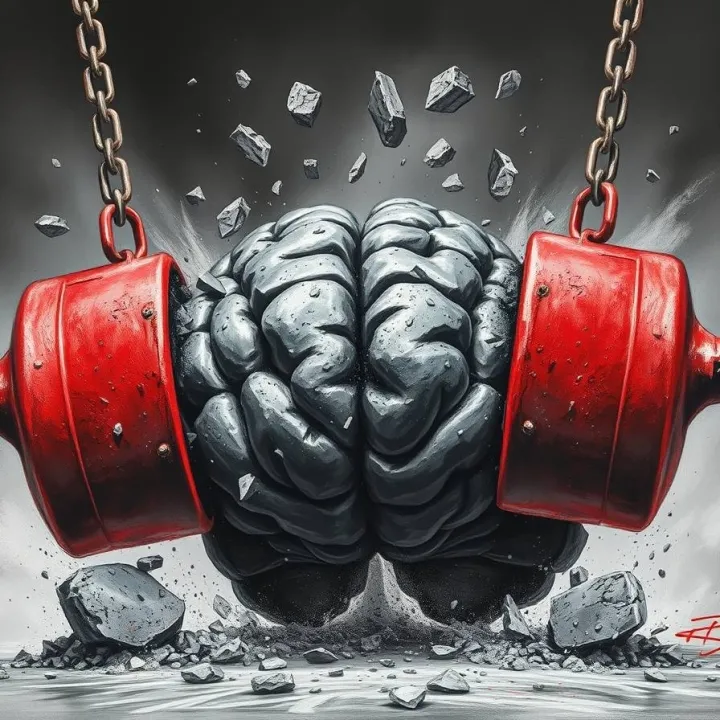
Headaches, fatigue, irritability, and poor concentration are classic signs of concussion. But what if these symptoms appear in people who never hit their head? A new study shows that the culprit may not be trauma at all - it may be rumination, a cognitive style where individuals dwell repetitively on negative thoughts.
Researchers from the University of New South Wales and Western Sydney University surveyed 625 adults with no history of head injury. Participants completed standard measures of post-concussive symptoms, depression, and two forms of self-focused coping: rumination (maladaptive) and reflection (adaptive). The results were striking.
Even after controlling for depression, gender, and medical history, rumination significantly predicted higher reports of post-concussive symptoms. Reflection, by contrast, did not reduce symptom reporting as expected. Altogether, the model explained 42.5% of the variance in symptoms - an unusually strong effect for psychological data.
Why Rumination Matters
Rumination has long been linked to depression, anxiety, and stress. It keeps the mind stuck in negative cycles, amplifying perceived distress and impairing problem-solving. In this study, participants who ruminated more frequently endorsed more concussion-like symptoms - despite never experiencing a concussion.
The authors suggest several mechanisms. Rumination may heighten awareness of bodily sensations, a phenomenon known as somatic symptom amplification. Minor discomforts - headaches, dizziness, or fatigue - become magnified and misinterpreted as evidence of injury. Rumination also correlates with catastrophizing and health anxiety, reinforcing the sense that ordinary lapses or pains signal something serious.
Reflection: No Protective Effect
The surprise was that reflection, often considered a healthier self-focus, did not shield participants from symptom reporting. Reflection is typically associated with curiosity, problem-solving, and resilience. Yet here it showed no measurable effect.
One explanation is statistical: reflection often correlates with rumination, and the negative impact of rumination may overwhelm any benefits. Another possibility is conceptual: not all reflection is adaptive. Self-examination without resolution can tip into unproductive self-focus, blurring the line between reflection and rumination.
Who Reports More Symptoms?
Several demographic and clinical variables also emerged as predictors.
- Female participants reported higher levels of symptoms than males.
- A history of headaches or a diagnosis of ADHD were linked to greater symptom reporting.
- Depression remained a powerful predictor even after other factors were considered.
Together, these findings underscore that post-concussive symptoms (PCS) are not unique to people with mild traumatic brain injury. Instead, they can emerge in the general population through the interaction of mental health, pre-existing conditions, and cognitive coping styles.
Clinical Implications
The results raise a provocative question: How many cases of "persistent post-concussive syndrome" are driven not by lingering brain injury, but by maladaptive cognitive habits? If rumination inflates symptom reporting, then interventions targeting rumination - such as cognitive-behavioral therapy (CBT) - could improve outcomes after concussion.
CBT techniques help patients identify ruminative thought loops, challenge catastrophic interpretations, and develop healthier coping strategies. Such approaches are already effective for depression and anxiety; applying them to post-concussion care may reduce symptom burden and shorten recovery.
Rethinking the Diagnosis
The study also highlights ongoing controversy around Persistent Post-Concussive Syndrome (PPCS). Because PCS symptoms overlap heavily with depression, anxiety, PTSD, and even ordinary life stress, it is difficult to distinguish true injury effects from psychological influences. This research adds weight to the argument that mindset, not just brain injury, shapes symptom experience.
A Broader Lens
The findings suggest a broader lesson about the mind - body link. Rumination doesn't just prolong bad moods - it can reshape how we interpret physical sensations, leading to real-world impacts on health and functioning. Reflection, in theory, could balance this effect, but without active problem-solving, it may fail to provide protection.
For clinicians, the takeaway is clear: assessing rumination after concussion - or even in people without trauma who report PCS - could flag those most at risk of prolonged difficulties. For individuals, the message is equally powerful: how you think about your symptoms can change how strongly you feel them.