Maugham's childhood was marked by early loss. His mother died when he was eight, and his father, a lawyer, died two years later. The orphaned boy was sent to live with his uncle, a clergyman in Whitstable, Kent, where he endured a strict and emotionally cold upbringing. A persistent stammer made his years at King's School, Canterbury, painful, and the experience of being an outsider helped shape the cool, watchful narrative voice that later defined his fiction.
He trained in medicine at St Thomas' Hospital in London and qualified as a doctor in 1897, but his first novel, Liza of Lambeth, drawn from his observations among the London poor, sold well enough to steer him toward writing. After years of struggle he broke through in the theater; by 1908 he had four plays running at once in London's West End, an achievement that made him a wealthy and much-sought-after dramatist.
Maugham turned increasingly to fiction, and Of Human Bondage (1915), a semi-autobiographical novel, is often considered his masterpiece. The Moon and Sixpence (1919) fictionalized the life of painter Paul Gauguin, and The Painted Veil (1925) followed. His short stories, collected in volumes such as The Trembling of a Leaf (1921), include the widely read "Rain" and "The Letter" and became staples of the form.
During World War I he served with the Red Cross and later in British intelligence, experiences that informed the spy stories of Ashenden (1928). Extensive travels through the South Seas, Malaya, and China supplied settings and characters for much of his later work, including the novel Cakes and Ale (1930) and The Razor's Edge (1944). He also wrote the reflective memoir The Summing Up (1938).
Maugham married Syrie Wellcome in 1917, and they had a daughter, Liza, before the marriage was dissolved in 1929. For many years his closest companion was Gerald Haxton, who served as his secretary. Maugham spent his final years on the French Riviera and died in Nice in 1965 at the age of ninety-one.
William Somerset Maugham was born on January 25, 1874 in Paris, Ile-de-France, France. In Cardology (Destiny Cards), January 25, 1874 corresponds to the Two of Diamonds, making the Two of Diamonds his Birth Card.
In numerology, the name adds another layer to the birth-date profile. The letters of a person’s name are used to explore inner motivation, personality, expression, and the qualities they bring into relationships and everyday life. Explore how his original name William Somerset Maugham influences his life and personality.
William Somerset Maugham Quotes
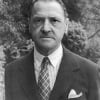
“If a man hasn't what's necessary to make a woman love him, it's his fault, not hers.” - William Somerset Maugham
“Money is like a sixth sense without which you cannot make a complete use of the other five.” - William Somerset Maugham
Famous Aquarius People
Discover famous Aquarius people, from actors and musicians to writers, athletes, and historical figures. Explore their birthdays and biographies, and see who shares the Aquarius zodiac sign.








View All Famous Aquarius People →
Famous People born on January 25

View All Famous People Born on January 25 →
Two of Diamonds Famous People


View All Famous Two of Diamonds People →