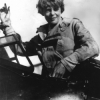
Atwood grew up in a family that prized science and the outdoors. Her father, an entomologist, moved the household to remote parts of northern Quebec for fieldwork during her early years, so she spent long stretches in the bush before the family settled in Toronto. She read widely as a child and began writing at an early age, producing stories, poems, and comic books before she had finished high school.
At the University of Toronto she studied under such figures as Northrop Frye and Jay Macpherson, earning a bachelor's degree in 1961. She went on to Radcliffe College for a master's degree and began postgraduate study at Harvard, though she did not complete a doctorate. During those years she poured herself into poetry, and her first collection, The Circle Game, appeared in 1964 and won the Governor General's Award, marking her arrival as a serious literary voice.
Her early novels, including The Edible Woman (1969) and Surfacing (1972), established her fascination with bodies, identity, and the pressures on women. Her 1972 critical study Survival argued for a distinctively Canadian literature and helped shape how the country's writing was read. She continued to publish poetry and fiction steadily through the 1970s and 1980s, building a reputation on sharp wit, social observation, and an ability to work across genres.
The Handmaid's Tale (1985), a dystopian novel set in a theocratic United States, became her best-known work and is often called a landmark of speculative fiction. She followed it with novels such as Cat's Eye (1988), The Robber Bride (1993), and Alias Grace (1996). Her Booker Prize-winning The Blind Assassin appeared in 2000, and her MaddAddam trilogy, beginning with Oryx and Crake (2003), explored genetic engineering and environmental collapse.
Atwood has remained prolific into her later years. In 2019 she published The Testaments, a sequel to The Handmaid's Tale, which won the Booker Prize alongside Bernardine Evaristo. She is a Companion of the Order of Canada and has received numerous honorary degrees and literary awards. Long partnered with the late writer Graeme Gibson, she is also known for her conservation advocacy and for co-inventing the LongPen, a device for writing remotely. Her work continues to be read, adapted, and debated around the world.
Margaret Atwood was born on November 18, 1939 in Ottawa, Ontario, Canada. In Cardology (Destiny Cards), November 18, 1939 corresponds to the Two of Clubs, making the Two of Clubs her Birth Card.
In numerology, the name adds another layer to the birth-date profile. The letters of a person’s name are used to explore inner motivation, personality, expression, and the qualities they bring into relationships and everyday life. Explore how her original name Margaret Eleanor Atwood influences her life and personality.
Margaret Atwood Quotes
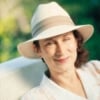
“Longed for him. Got him. Shit.” - Margaret Atwood
“Forgiving men is so much easier than forgiving women.” - Margaret Atwood
Famous Scorpio People
Discover famous Scorpio people, from actors and musicians to writers, athletes, and historical figures. Explore their birthdays and biographies, and see who shares the Scorpio zodiac sign.



View All Famous Scorpio People →
Famous People born on November 18
View All Famous People Born on November 18 →