Carnegie grew up in Scotland in a family of handloom weavers whose livelihood was undermined by the rise of power looms. Seeking better prospects, the family emigrated to the United States in 1848 and settled near Pittsburgh. At thirteen, Carnegie took a job as a bobbin boy in a cotton mill for $1.20 a week. Hungry to improve himself, he read widely, attended free lectures, and soon found work as a telegraph messenger and then a telegraph operator, a skill that brought him to the attention of the Pennsylvania Railroad.
Hired by the railroad, Carnegie became a protégé of executive Thomas Scott and rose quickly through the company. He learned the rail business from the inside and began investing in oil, bridges, and iron, using his earnings and his gift for spotting opportunity. During the Civil War he helped organize the railroad's telegraph operations and the military telegraph service. These ventures gave him capital and contacts that positioned him for the steel age.
Carnegie concentrated on steel after seeing the promise of the Bessemer process. He built mills, bought iron ore fields, ore ships, and railroads, and pursued relentless cost control so his company could undercut competitors. The result was the Carnegie Steel Company, centered in Pittsburgh and among the most efficient producers in the world. His labor relations, however, were harsh; the violent Homestead Strike of 1892 damaged his reputation even as his business grew.
In 1901 Carnegie sold Carnegie Steel to J. P. Morgan, who folded it into U.S. Steel; the deal made Carnegie one of the richest men in the world. He then committed himself to philanthropy, arguing in his 1889 essay "The Gospel of Wealth" that the wealthy should use their fortunes for the public good. Over the following years he funded more than 2,500 libraries, Carnegie Hall, the Carnegie Institute, what became Carnegie Mellon University, and the Tuskegee Institute, and he endowed organizations devoted to peace and international cooperation.
Carnegie spent his later years giving away the bulk of his fortune, though he never gave away all of it. He died in 1919 in Lenox, Massachusetts, leaving a legacy defined as much by his libraries and endowments as by the steel empire he built.
Andrew Carnegie was born on November 25, 1835 in Dunfermline, Scotland, United Kingdom. In Cardology (Destiny Cards), November 25, 1835 corresponds to the Eight of Hearts, making the Eight of Hearts his Birth Card.
In numerology, the name adds another layer to the birth-date profile. The letters of a person’s name are used to explore inner motivation, personality, expression, and the qualities they bring into relationships and everyday life. Explore how his original name Andrew Carnegie influences his life and personality.
Andrew Carnegie Quotes
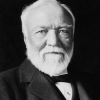
“Do not look for approval except for the consciousness of doing your best.” - Andrew Carnegie
Famous Sagittarius People
Discover famous Sagittarius people, from actors and musicians to writers, athletes, and historical figures. Explore their birthdays and biographies, and see who shares the Sagittarius zodiac sign.






View All Famous Sagittarius People →




Eight of Hearts Famous People
View All Famous Eight of Hearts People →