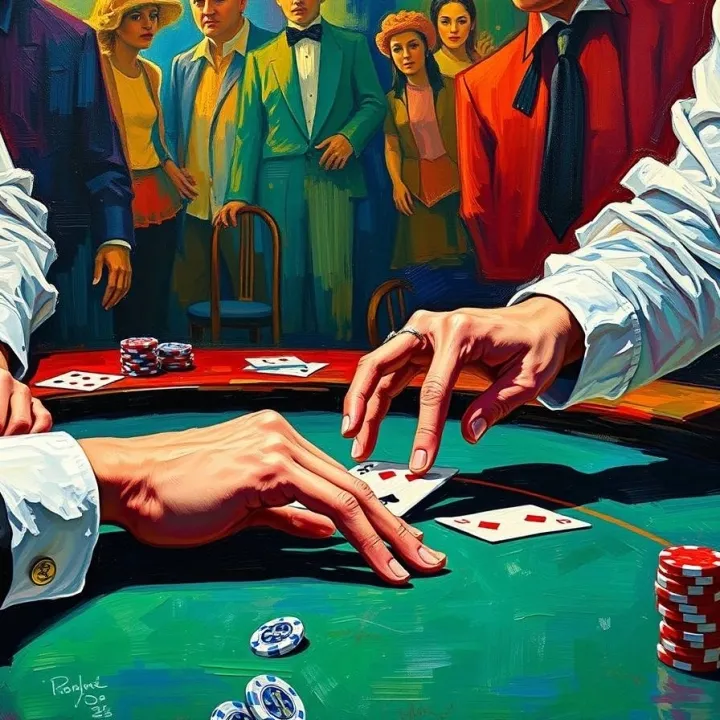
Most people think of playing cards only as tools for games or gambling. Poker nights, casinos, and even casual games like Solitaire reinforce the idea that cards are simply entertainment. But behind this familiar deck lies a much older and deeper symbolic system. Long before Las Vegas slot machines or video poker earned the nickname "the crack cocaine of gambling," cards carried meaning that could shape how people understood their own lives.
The question is: why do cards exert such a strong pull on us? Why have they been used for centuries in fortune-telling traditions like Tarot, and why do some people develop obsessions with gambling while others remain indifferent? The answer may lie in the symbolism embedded in the structure of the deck itself.
A Hidden Knowledge
For centuries, the deeper knowledge of the cards was preserved within secret orders and esoteric schools. It wasn't until the late 20th century that parts of this tradition were revealed to the public. Even then, it was only fragments. The teachings suggested that the deck is not arbitrary, but a symbolic map of time, energy, and life patterns.
The cards carry an active energy that resonates with us emotionally, mentally, and spiritually. This is why people can feel drawn to them, whether through fascination, superstition, or even destructive obsession. Like any powerful symbol, cards can be used wisely - as tools for insight and guidance - or destructively, as instruments of compulsion.
Why This Structure?
At first glance, the deck's design seems almost random. There are four suits. Why not six, or seven? Each suit has thirteen cards. Thirteen is a number so superstitiously avoided that modern buildings often skip the 13th floor. And yet here it stands, central to the structure of the deck.
Within each suit are numbers from two through ten, plus the face cards and the Ace. Multiply the 13 cards per suit by the four suits, and you get 52 cards. Fifty-two also happens to be the number of weeks in a year.
Coincidence? Perhaps not.
When you look deeper, the structure begins to make sense. The deck is a symbolic reflection of time:
- 52 cards = 52 weeks in a year
- 4 suits = 4 seasons
- 13 cards per suit = 13 lunar cycles in a year
- 12 court cards (Kings, Queens, Jacks) = 12 months
- 364 "pips" (the spots on all the numbered cards) = 364 days in a year
- Joker = the extra day (or two) in the leap cycle
The deck is not random at all. It is a calendar, a map, and a symbolic system - one that quietly encodes the rhythms of life.
The Birth Card
Within this symbolic structure, every day of the year is assigned to a specific card. This is what is meant by your Birth Card. Just as your zodiac sign is determined by the position of the Sun at your birth, your Birth Card is determined by the symbolic calendar of the deck.
- 364 days are covered by the 52 cards, each repeating seven times - a nod to the seven planets known to ancient astrologers.
- The Joker fills the "extra" day, December 31, as the wild card outside the usual system.
Your Birth Card is more than a curiosity. It represents the archetypal energy you were born into. It outlines the qualities, challenges, and lessons that shape your life path.
What a Birth Card Represents
Edith Randall and Florence Campbell, pioneers in the study of Destiny Cards, emphasized that the cards should not be treated as empty symbols. They wrote:
"If symbols are a dead language to you, with no meaning other than outline of their form, and if you have decided that spots must remain spots and that Kings, Queens, and Jacks are nothing but pictures, this material is just a waste of your time. If you are sincere in your quest, you will come to revere it as a true and accurate key to your own life path, your wise handling of its outlines, and your just and intelligent dealing with those in your environment."
In other words, your Birth Card is not just a game piece. It is a key. It represents the archetypal role you play in the cosmic story.
- A Hearts card may emphasize love, emotions, and family.
- A Clubs card may highlight ideas, learning, and communication.
- A Diamonds card may reveal lessons in values, work, and material growth.
- A Spades card may signify challenges, discipline, and transformation.
The position of your card in the larger spread also matters. Some cards are "fixed," never changing place in the grand rotation, while others are "semi-fixed" or move in partnership with another. These patterns reflect the way your energy interacts with others across time.
Why It Still Matters
Skeptics might ask: why, in an age of quantum mechanics and modern science, should anyone take Birth Cards seriously? The answer is simple: because symbols still speak.
Human beings are symbolic creatures. We dream in symbols, we create myths, and we navigate life using maps of meaning. Birth Cards are one such map. They don't lock us into fate, but they provide language for understanding patterns we might otherwise miss.
Just as astrology or numerology can reveal themes in our lives, so too can the Birth Card system. When studied sincerely, it can guide self-reflection, illuminate relationship dynamics, and highlight opportunities for growth.
Final Thoughts
Your Birth Card is not just a curiosity tucked inside a deck of playing cards. It is a symbolic reflection of who you are and the path you walk. Whether you approach it as a spiritual seeker, a skeptic curious about patterns, or someone simply exploring traditions, the Birth Card offers a tool for self-discovery.
The deck of cards is not random. It is a calendar, a puzzle, and a mirror. And your Birth Card is one of its most important keys - a key to your character, your challenges, and your destiny.