Borderline personality disorder has long been one of psychiatry's most controversial labels. It is associated with emotional intensity, relational instability, and vulnerability to distress, yet its diagnostic boundaries remain contested. Many clinicians hesitate to use the term because of its stigma, while others insist that withholding it prevents individuals from accessing appropriate care. A new Open Access essay in Social Politics shifts this debate in a different direction. Rather than asking what borderline personality disorder truly means, the authors investigate how the diagnosis operates within social, institutional, and political systems, and for whom it functions differently.
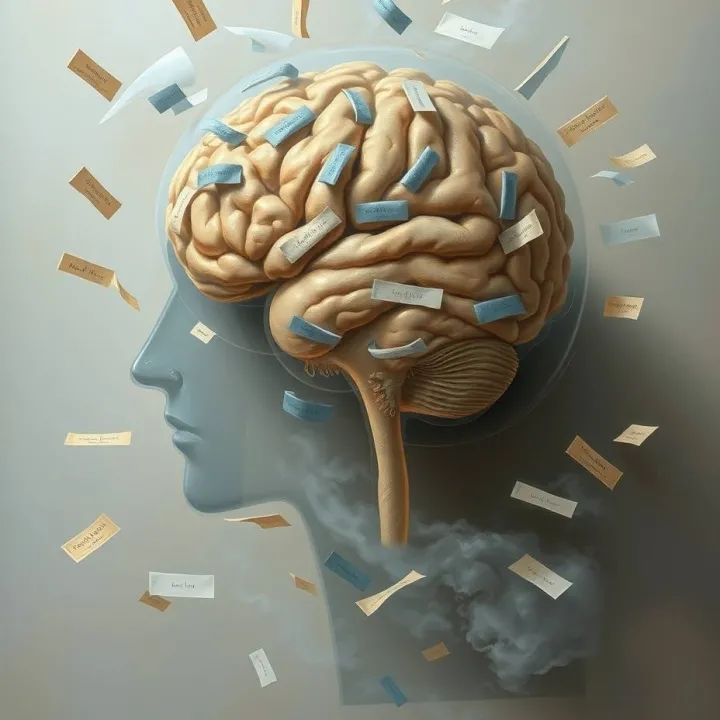
Borderline personality disorder is disproportionately applied to cisgender women, as well as transgender and nonbinary individuals, reflecting longstanding psychiatric patterns that pathologize those who depart from normative gender expectations. People labeled with "BPD" often report being dismissed, seen as manipulative, or treated as inherently untrustworthy in clinical settings. The essay notes that this stigmatization persists across mental health systems despite ongoing destigmatization efforts. In many clinical environments, merely having the label in one's chart can influence how concerns are heard, how treatment is delivered, and whether one is perceived as credible when describing symptoms or seeking help.
However, the authors emphasize that the borderline diagnosis does not function in the same way for all who receive it. Those with racial, economic, or geopolitical privilege often experience the label as a pathway to treatment, community, or even a form of identity. Online communities and advocacy groups have further transformed the diagnosis into a category around which people can organize, share experiences, and build visibility. For some, naming the diagnosis is affirming, describing a recognizable constellation of emotions and responses that had long felt confusing or invalidated.
Yet these reclamation movements tend to emerge from predominantly white, affluent contexts, particularly in the Global North. In these spaces, individuals can publicly identify with borderline personality disorder without facing the kinds of structural discrimination that others experience. The essay argues that this uneven distribution of risk means that while some people can mobilize borderline identity as a source of connection or empowerment, others live with the label primarily as a mechanism of surveillance, control, or exclusion. For individuals facing criminalization, housing instability, racialized policing, or immigration scrutiny, the diagnosis may carry consequences that extend far beyond clinical treatment.
These disparities highlight how the category of "borderline" functions as more than a medical descriptor. It operates as a social technology - one that organizes access to support, determines who is viewed as sympathetic or dangerous, and shapes how institutions interpret distress. The authors draw attention to the fact that the clinical label can both capacitate and debilitate depending on the context. For some, the diagnosis grants entry into specialized services, insurance coverage, or therapeutic communities. For others, it is used to deny care, justify punitive responses, or frame individuals as unstable and thus less deserving of empathy or resources.
The analysis further examines a growing trend in online mental health spaces: the rise of influencers, advocates, and content creators who identify with "BPD" and promote recovery narratives. Although these voices play a role in reducing stigma, they may unintentionally reinforce narrow understandings of distress by prioritizing individual resilience over structural conditions. The essay notes that stories of healing and empowerment often reflect particular forms of privilege - access to therapy, safety from racialized state violence, and freedom to speak openly about mental health without jeopardizing housing, employment, or legal status.
Conversely, the authors highlight that distress commonly attributed to "borderline" symptoms often emerges in response to systemic inequities, trauma, and socioeconomic precarity. Framing these experiences primarily as psychiatric pathology risks obscuring the broader forces that produce emotional suffering. The essay warns that destigmatization movements can unintentionally overlook the ways colonial histories, racialized policing, gendered violence, and economic marginalization shape who is diagnosed, how they are treated, and what forms of care are available.
This lens challenges the assumption that mental health stigma operates uniformly. Instead, it invites a more nuanced understanding of how psychiatric categories interact with race, gender, class, and geopolitical location. The authors argue that calls for "better treatment" or clinical reform do not fully address these deeper dynamics, because the diagnosis itself remains shaped by systems that unequally distribute safety, credibility, and belonging.
By examining how the borderline category is used - rather than what it signifies - the essay helps reframe the debate around psychiatric labels. It underscores that diagnoses are not neutral descriptors of underlying psychological states. They are tools that operate within institutions and cultural frameworks, shaping interactions and expectations. Understanding this complexity requires acknowledging both the relief that a diagnosis can provide and the structural harm it can perpetuate.
From the perspective of Seven Reflections' Dimensional Systems Architecture (DSA), this analysis illuminates how labels function as field-level interfaces. A diagnosis acts as an identity-bound structure within a social field, altering how one is perceived, approached, and constrained. It shapes relational vectors - who moves toward the individual with empathy, who withdraws, and which institutions exert control. In DSA terms, the borderline label becomes a structural attractor that organizes interactions around itself, concentrating systemic pressure in some contexts while diffusing it in others. Distress does not emerge solely from internal states but from the collision between a person's lived field and larger socio-institutional architectures.
The essay ultimately argues that any meaningful rethinking of borderline personality disorder must grapple with this structural reality. Efforts to destigmatize or reclaim the label cannot overlook the material conditions that shape emotional distress, nor the ways social systems distribute vulnerability and capacity. Understanding what the diagnosis does - who it protects, who it exposes, and how it circulates - may be more important than attempting to redefine what borderline personality disorder is.