Cognitive Science bridges the gap between the brain and the mind - tracing how networks of neurons shape perception, attention, memory, and imagination. This section explores the science of thinking and awareness, from the role of the default mode network in creativity to the mechanisms of focus, flow, and altered states. By bringing together neuroscience, psychology, and philosophy, we highlight the discoveries that reveal not only how the mind works, but how it can be expanded.
A new Open Access study published in The British Journal of Criminology explores how people convicted of murder when young morally interpret their actions across years or decades. The research introduces the concept of "moral weight," describing how responsibility, context, and perceptions of the victim shape the emotional and cognitive burden carried after a fatal act. The findings reveal a spectrum - from bearable regret to crushing shame - and show how the human mind attempts to reconstruct coherence, identity, and future orientation after profound moral rupture.
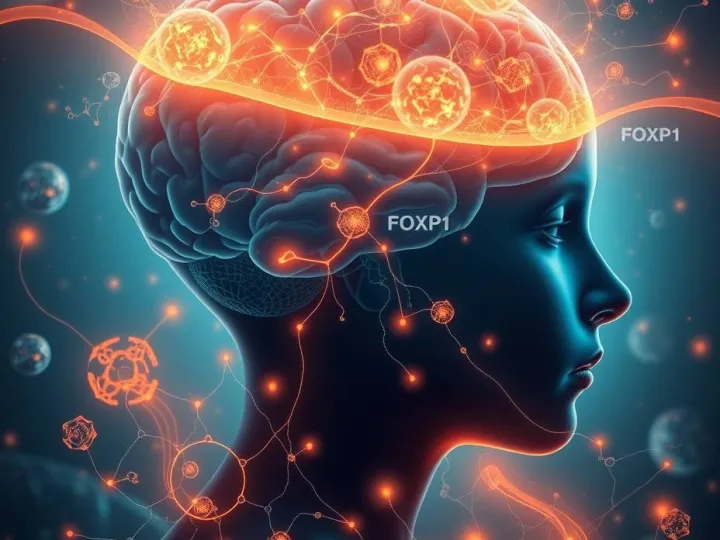
A new study in Human Molecular Genetics reveals that genetic risk for schizophrenia does not arise at a single moment in brain development, but unfolds across shifting stages of growth. Researchers examined how FOXP1 - a key transcription factor shaping early neurodevelopment - regulates different sets of genes from prenatal life through adolescence. Their results show that FOXP1-regulated genes linked to schizophrenia peak in influence during periods that map to the second trimester, early childhood, and adolescence. This dynamic pattern uncovers new insights into how developmental timing shapes vulnerability and resilience in the brain.
A new open-access study in Social Cognitive and Affective Neuroscience reveals that the way we interpret the world begins long before conscious thought. Researchers show that individuals with low anxiety gravitate toward positive cues, while those with higher anxiety automatically detect negative or threatening information first. This early attentional bias emerges in milliseconds, driven by bottom-up neural processes. The findings offer insight into why perception differs so dramatically among individuals - and how deep emotional patterns can be gently retrained.
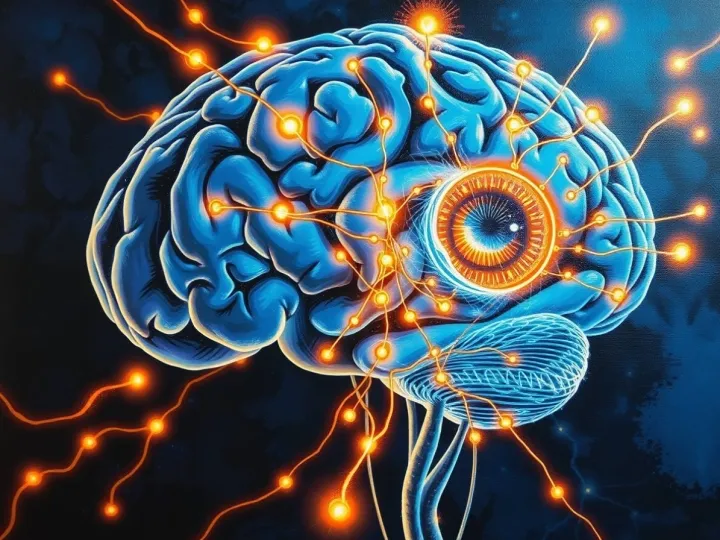
A new open-access study in Neuron reveals that vision is not a passive recording of the world but a dynamic, state-dependent computation shaped by internal brain signals. Researchers at MIT's Picower Institute mapped a specialized feedback circuit linking the prefrontal cortex with visual and motor areas in mice. They found that arousal and movement send targeted instructions that sharpen certain visual features while suppressing others. The findings show that what we see depends strongly on how alert, active, or behaviorally engaged we are - not only on the stimulus itself.
A new open-access study in Archives of Clinical Neuropsychology examines how handedness shapes working memory performance across verbal, visuospatial, and tactual modalities. While left- and right-handed participants showed similar overall working memory ability, the study uncovered subtle but meaningful modality-specific patterns: left-handers excelled on visuospatial recall, whereas right-handers outperformed left-handers on backward tactual sequencing. These findings highlight how hemispheric lateralization contributes to task-specific strengths and refine how clinicians interpret working memory assessments.
A new open-access study in the Journal of the European Economic Association presents a refined model of early childhood skills formation, revealing that child allowance policies may have larger and more lasting impacts than earlier research suggested. By integrating a more realistic account of parental decision-making, income risk, time allocation, and the joint development of cognitive and non-cognitive skills, the analysis shows that parental investments are more effective than previously estimated. This enhanced understanding reshapes how policymakers can evaluate the long-term benefits of supporting families.
A new study published in Schizophrenia Bulletin introduces a set of innovative natural language processing metrics that disentangle two core features of formal thought disorder: derailment and semantic perseveration. Using generative language models to simulate different types of disorganized speech, the researchers identified structural patterns that traditional semantic-distance metrics miss. Their findings suggest that density-based measures can more accurately detect repetitive or stuck thinking, offering clearer insights into disordered cognition across psychiatric conditions.
A new randomized controlled pilot trial published in Annals of Behavioral Medicine reports that both calming and stimulating stress-resilience practices can reduce depressive symptoms and perceived stress within weeks. The study tested mindfulness, slow breathing with warm showers, the Wim Hof Method, and high-intensity interval training among highly stressed women. While all approaches led to short-term improvements, participants who followed the Wim Hof Method showed modestly more sustained gains three months later. The findings refine how both low- and high-arousal strategies support human stress regulation.
As workforces become older and more age-diverse, leadership no longer functions the same way for everyone. A new systematic review of nearly 40 years of research shows that leadership styles interact with employee age in complex, measurable ways - boosting wellbeing for some groups while influencing retention or performance for others. Younger, midlife, and older workers respond differently not because of stereotypes, but because motivation, goals, and cognitive priorities shift across the lifespan. Understanding these patterns may help organizations build healthier, more adaptive, and more age-inclusive workplaces.