As the global population ages, understanding how people experience the psychological and emotional dimensions of aging has become increasingly important. A new open-access study in the Aesthetic Surgery Journal Open Forum offers one of the most comprehensive looks yet at how adults between the ages of 50 and 80 perceive aging - and how aesthetic medicine intersects with these perceptions.
Conducted across eight countries between July and September 2022, the online survey included 7,588 respondents from the United States, Brazil, Germany, Spain, the United Kingdom, Israel, China, and Japan. Participants were divided into three categories based on their relationship to aesthetic medicine: "aesthetics receivers" who had received treatments; "naïve considerers" who had not but were open to doing so; and "naïve non-considerers" who neither had nor planned to seek aesthetic procedures.
The research, led by Stephanie Manson Brown and colleagues, sought to examine how psychological satisfaction, expectations of aging, and self-perceptions vary between these groups. While aesthetic medicine is often discussed in the context of youth, this study focuses on a population typically underrepresented in such research - older adults.
Across all groups, approximately 80% of respondents expressed satisfaction with their mental well-being, self-confidence, and sense of joy in life. These results suggest that emotional stability and resilience remain strong throughout later adulthood, regardless of one's engagement with aesthetic treatments. However, the survey revealed subtle distinctions between groups that illuminate the nuanced relationship between appearance and self-perception.
Naïve non-considerers - the group with no history of and no interest in aesthetic treatment - tended to hold the most positive overall view of aging. They expressed less worry about growing older and emphasized nonphysical benefits such as having more time for hobbies, family, and leisure. In contrast, respondents who had undergone or were considering aesthetic procedures were more likely to express concern about the physical effects of aging, particularly changes in appearance.
Yet despite this concern, 83% of all respondents, regardless of group, agreed that aesthetic treatments provide emotional benefits. Among those who had received treatments, 94% reported feeling more confident, refreshed, or "like the best version" of themselves. Even among those with no treatment experience, more than half acknowledged that aesthetic interventions can positively influence self-image and mood.
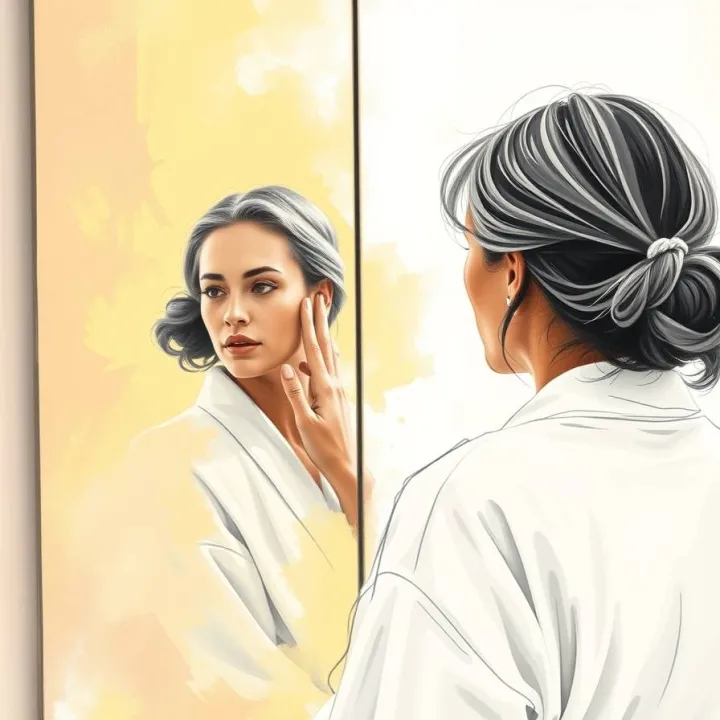
The researchers interpret these results as evidence that aesthetic medicine is increasingly viewed not as vanity but as a form of self-care and empowerment - especially for older adults who wish to align their inner vitality with their outward appearance. For many participants, aesthetic treatments represent an expression of autonomy and continuity of self, rather than a rejection of aging.
Interestingly, the study found that younger participants within the cohort (aged 50 - 59) were more ambivalent about aging and less likely to view aesthetic procedures as emotionally beneficial compared to those in their 60s and 70s. This suggests that acceptance of aging - and appreciation for aesthetic interventions as part of holistic well-being - may increase with age.
Gender differences also emerged. Women were more likely than men to link appearance to emotional well-being and to agree with the statement, "I want to look like the best version of myself as I age." While 76% of women shared this perspective, only 59% of men did. Male participants tended to emphasize functional aspects of aging - such as mobility and independence - over appearance-related factors.
Overall, most participants viewed aging as both an opportunity and a challenge. About half listed physical health and mobility among their top concerns, followed by memory changes and loss of independence. However, respondents across all groups emphasized that aging also brings greater freedom, wisdom, and time for personal fulfillment.
The findings contribute to a broader understanding of "successful aging," a concept defined by the absence of disease, maintenance of physical and cognitive health, and sustained social engagement. The study suggests that aesthetic medicine may play a supportive role within this framework - particularly by promoting confidence, emotional balance, and self-expression. Rather than "reversing" aging, aesthetic care may help individuals feel more congruent with their sense of self, reinforcing psychological well-being and social participation.
The authors note that while aesthetic treatments are commonly studied in younger populations, older adults represent a growing demographic for whom aesthetic medicine is increasingly relevant. The global shift toward an older population - expected to exceed 1.5 billion adults over 60 by 2050 - makes understanding these dynamics essential for healthcare, psychology, and social policy.
From the perspective of Seven Reflections' Dimensional Systems Architecture (DSA) framework, the study highlights how perception, identity, and self-image operate within a structured cognitive field that evolves with age. In DSA terms, aging represents a reconfiguration of field dynamics: the individual's internal coherence must adapt to changes in external form and energy distribution. When that adaptation remains synchronized - when the self-image aligns with the lived field - the system maintains stability and emotional clarity.
Aesthetic medicine, viewed through this lens, becomes not merely cosmetic but structural - a symbolic mechanism that helps restore field symmetry between internal and external representation. This symmetry supports cognitive balance, reducing internal dissonance between perceived self and visible self. Conversely, individuals who embrace aging without intervention represent another form of field coherence, one that stabilizes through acceptance rather than transformation.
Thus, both approaches - engagement with aesthetic medicine or conscious non-engagement - reflect different strategies of maintaining cognitive-field integrity across time. In this sense, beauty and aging are not opposites but complementary expressions of system self-regulation. The study's findings confirm that the desire to "feel like oneself" is not superficial but deeply structural: it is the psyche's way of maintaining resonance within its evolving dimensional framework.